Monday, July 16, 2012

CURACAO


From Klein Curacao we sailed a short distance of 15NM to Spaanse Water on the SW end of Curacao. The large bay is giving a shelter to many boats. A narrow entrance does not allow a good flow, the water in the bay is not clean. Still, many windsurfers enjoy the wind gusts blowing down surrounding hills.


We anchored in a part of Spaanse Water called Caracasbaai, a short distance to the beach on the outer side of the island, windy, but clean water. There were some interesting sides to see also.

Fort Beekenburg with Rok and Alex
 We intended to take Anka's family to other bays. Not easy! There were only four bays, including Spaanse Water, we could get a permit to anchor in, one of them. Piscadera, to shallow for our keel, Santa Cruz to far NW, we would have a difficulty sailing back against the wind in one day.
When kids came, we rented a car and toured the island, stopped for s swim in some bays we couldn't sail into. In West Punt we snorkeled among the turtle colony.

Groot Knip Baai
Santa Cruz Baai
Spaanse Water Baai
The island has some attractions, unfortunately overshadowed by trash, years collection of plastic bags and paper caught in the thorny bushes and cacti.

Well organized is the ostrich farm: the tour, restaurant with mostly ostrich dishes and a store, selling arts from Zimbabwe, where the owners of the farm originate from.


                                                                         War dance
Some island sights:
The house built by the first Dutch settlers, renovated and lived in
Abandoned old house, blooming agava in front
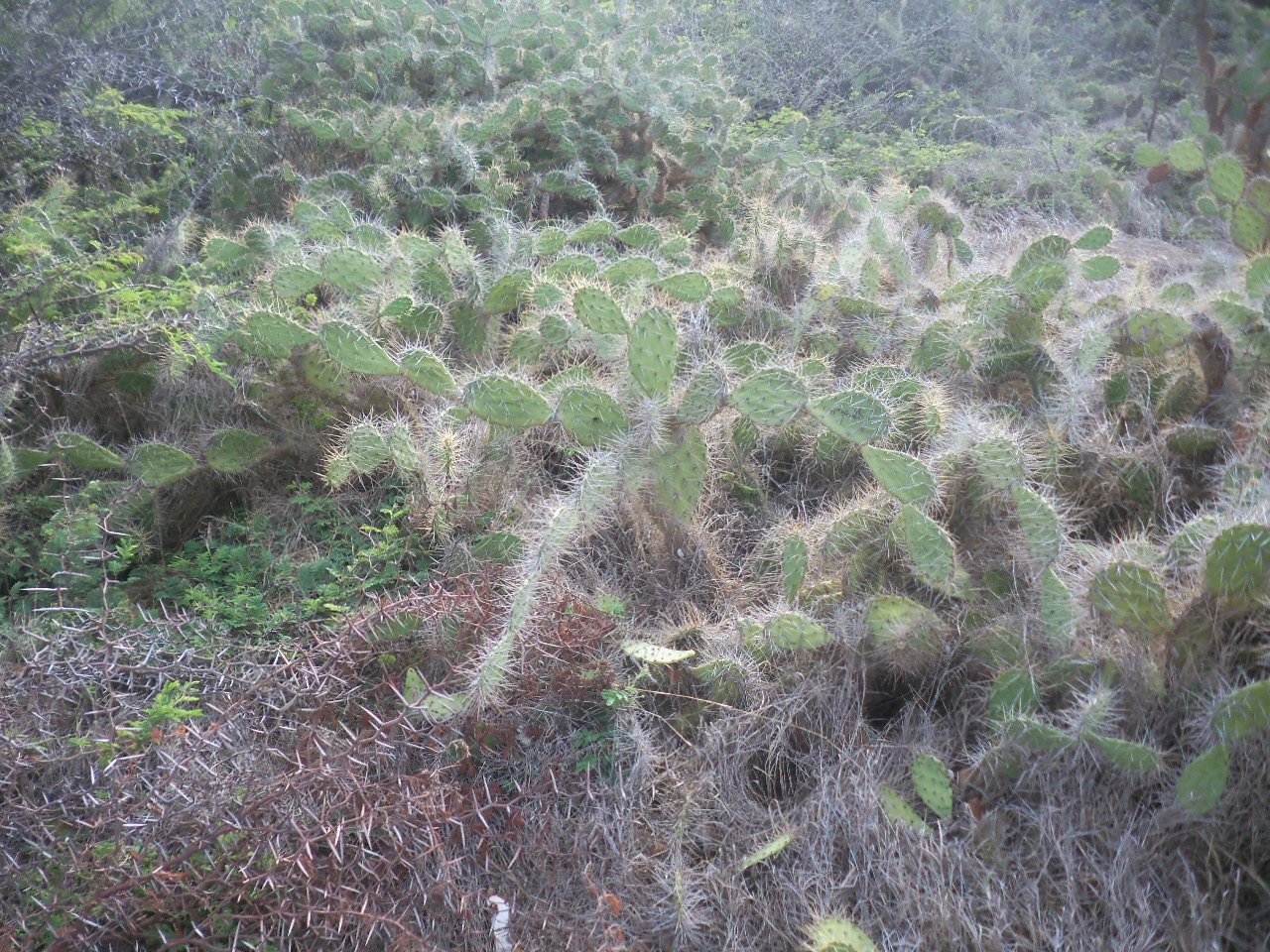
Cacti wrapped in a thorny vine, a common sight on the island
East side of the island is rough, grey limestone fields, where a long line of wind generators were built. Not much is growing there but wind and drought resisting cacti.

Many ages of sea splashing over the unprotected east side of the island
Patches of cacti holding on to the rare soil

 After two days of touring the island  we sailed to Fuik Baai, a  bay on SW  end of Curacao.

The bay can only be reached by boats, so it is quiet during the week. On weekends locals sail and motor in to enjoy the clean water.


We returned to Spaanse Water to part with Anka, who had to return to work. With boys we sailed back to Fuik Baai for another three days, the time we got an anchoring permit for. Claiming to protect the environment, the Port Authority is limiting anchoring in bays. Curacao has a problem with drug trafficking from the nearby Venezuela and is controlling it's coast. Each time we sailed into Fuik Baai, were were boarded by the Coast Guards.

The main attraction of Curacao is the Capitol Willemstad. It's centre is divided by St. Annabaai channel, Punda on the east and Otrobanda (The other side) on the west side.   

Otrobanda
Fixed high bridge connecting the two sides of the city
A Punda street
Punda waterfront
Floating market
Our young family walking on the pontoon bridge, Punda in the background
Dutch girls on the school bus
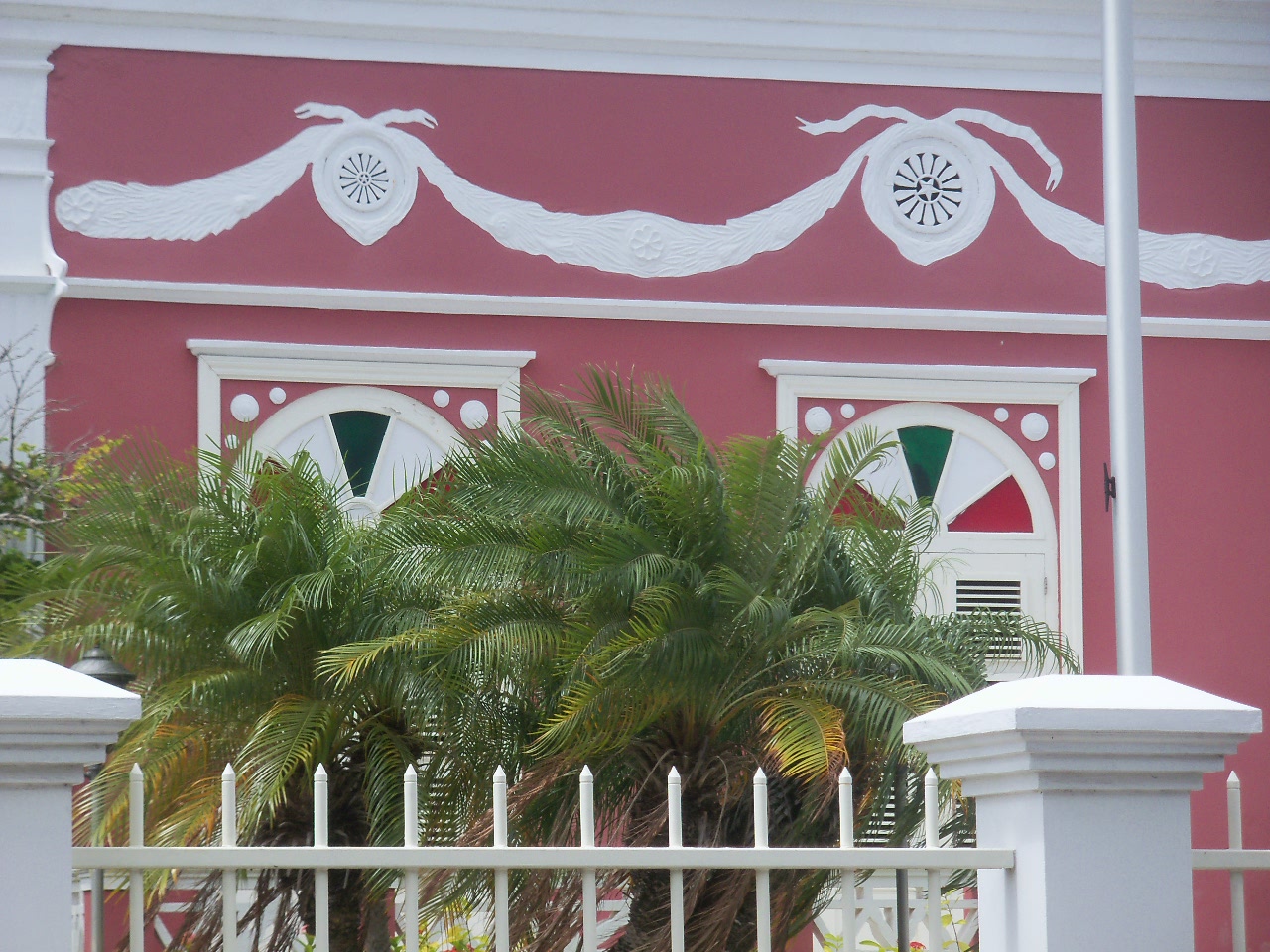
Interesting Willemstad buildings


Entrance to the Kura Hulanda, hotel and side-walk gallery 


Cafe' art

Sunday, July 15, 2012

KLEIN CURACAO


After spending two months on Bonaire, resting, playing tennis, socializing, and diving, it was time to rise sails again.
We sailed toward Curacao with two days stop on Klein Curacao. It is a small island, 1 1/2 miles long and 1/2 mile wide, so flat, anchoring on west side one can see the waves splashing against the rocks on east side. White sandy beach stretches along the west side, the rest of the island is limestone, chewed up by the sea.
Klein Curacao would not be seeing by sailors until a close approach, but for a picturesque lighthouse and a large rusty shipwreck.
Except for a few palm trees, planned by the beach, when the weekend restaurant was still operating, a few lonely thorny bushes and some ground cover are resisting raggedy weather conditions.
Before oil refineries were built on Curacao, Klein Curacao supplemented the big brother's island economy with the phosphate mines. A couple of buildings, that miners lived in then, are now falling apart.

Miners' village
On weekends the boats from Curacao bring tourists to enjoy the beach and splash in a turquoise water. By Sunday afternoon Klein Curacao is quiet again.


Sunday, June 24, 2012

TWO OF OUR INTERESTING BONAIRE FRIENDS


Elisabeth came from the Nederland as a dive instructor. Kids' tennis in her Bonaire area needed to be organised, and being also a tennis pro, she took the challenge and has been for the last twelve years successfully running the tennis school and taking kids to other islands to compete.

Elisabeth with Polde
  Aletta was a nurse in the Nederland, left a busy city life eleven years ago. In the middle of Bonaire, where the heat would be unbearable for most, she bought a small house, surrounded by thorny bushes and cacti, and eleven goats. Her furry family grew; now she owns one hundred goats and is selling cheese to Bonaire restaurants and stores.


BONAIRE


We have been on Bonaire since late April, playing tennis almost every day, melting ( a nicer word for sweating) on a hot court. Our tennis rust is slowly peeling off.

Bonaire tennis court
A visitor interrupted our game 
Cheering section

Bonaire national bird is trupial, oriole family, it's nest swinging in the wind. After trupial's offspring find their own life away from home, saffron finch settles in it's hanging nest.


Saffron finch
Bonaire differs from other Caribbean islands, it is flat with the exception of the north part. There is only one large natural beach, enclosed in the lagoon on the east side. The island is surrounded by coral reefs, that attract thousands of divers every year. I joined their force last week by going through somewhat unpleasant tests. Well worth for enjoying the beauty of the silent world.

My instructor Chris Verstappen, who was said to have gills

As we drove the bumpy road across the island, we noticed the difference since we sailed here seven years ago. The desert is slowly giving in to green shrubs, though the forests of tall cacti are still dominant. The prickly plants are also widely used for fences.

Try to climb over this fence
Or try to stand on it

Kralendijk , the Capitol, is a charming small town with many souvenir, craft and jewellery shops, but also large supermarkets. There you buy what you recognise, most labels are in Dutch. You like the variety of foods? There are plenty of restaurants, from French 'Bistro de Paris', Argentinian, Polynesian, Chinese to the excellent fish treat in 'It Rains Fishes'.

Karelsbar on the Kralendijk's waterfront
There is no anchoring here. To protect the coral, mooring
blocks were put in the sand close to the shore
On Sunday locals come to catch small fish in a shallow water
Sunset over Klein Bonaire, the bird sanctuary 

Tuesday, May 1, 2012

FROM MARTINIQUE TO BONAIRE


Sunday, April 15th we left Martinique in a light E wind, blowing into the stern all the way to Bonaire. We sat up whisker poles and sailed wing to wing. The wind almost never exceeded ten knots. It was an easy passage, that took 96 hours. The second day it rained, but the following day the sun dried out our wet clothing.
Our fishing luck returned, we caught a large dolphinfish (mahi-mahi).

Dolphinfish 

A FEW IMPRESSIONS OF LE MARIN, MARTINIQUE

Bus stop
Ready to leave 
The street up the hill
The street down the hill to the marina