Tuesday, June 11, 2013

MARTINIQUE

After a pleasant 22NM sailing day we anchored in Prince Rupert Bay in Dominica, where we spent a leisurely afternoon. Over the years of coming there we became friends with a few locals, who always visit us and made us feel welcome. One of them is an excellent tour guide Albert, who took us on the Indian River trip through the rain forest.
In the evening we attended the cookout benefiting local boat boys.

We stayed the night and on the 16th of May sailed to St.Pierre on the NW coast of Martinique.
Once commercial, cultural and social center of Martinique was in 1902 berried by volcanic ashes, 30 thousand people lost their lives. The town was rebuilt, but the center of the island moved to Fort de France.
A few times we enjoyed this unique town and i wrote about it already. I will not bore my friends with the details again. 
St.Pierre anchorage, the town and Mount Pelle in the background 
Next port: Le Marin
The busiest marina of all
Gingerbread houe beautified by a poinciana tree
 
Club Med at the entrance of the Le Marin Bay
A lot of sailing equipment is being sold in Le Marin, yet, we couldn't find a new gypsy for our windlass. We will have to struggle with the anchor chain, until we get to Grenada.

To satisfy our appetites, we supplied ourselves with wines, cheeses, pate de canard and more...


Saturday, June 8, 2013

ILES DES SAINTES

We left Guadeloupe Tuesday May 14th, sailing south to Des Saintes, a charming group of French islands. It was a short stop this time, still enjoyable in the picturesque surrounding.

The only town Bourg des Saintes
Some years back fishing was the major source of living. Now it is tourism. Bourg has a number of restaurants and shops, or you can rent a scooter, already bend on some other islands.

Unusually structured rock

Yellow and purple alamanda


GUADELOUPE

DESHAIES
After and early start and a long day of sailing 55NM we anchored in Deshaies. The town is among our favorites in the Caribbean.
To enter Guadeloupe is simple, French style. You type the information on the computer, print it out and you are signed in. It is done in a charming shop 'Pelican', selling crafts.
Main street is attracting visitors with pastry and cafe shops, small boutiques and a fruit and vegetable market.
Some houses have the fronts covered by dark wood


With four sailing friends we hiked over the steep hill to Grand Anse, a beautiful long beach. We were caught in a rain and were sliding on mud and roots. Polde fell and landed with his back on a rock. Painful, but fortunately nothing broke. First mate was doing blue jobs for some time after that.

That night our anchor dragged. We drifted out to the open sea and changed the CQR anchor (not an easy task) for the danforth. We reanchored in the morning, tired after the sleepless night.

We enjoyed French territory a few more days, having fresh bread and pastry for breakfast and French wine with our meals.
We were entertained by the dolphins, twice coming into the bay, playing around the anchored boats,

 
and by local regatta of small sailboats, that looked like butterflies on the water.

 
We stayed in Deshaies five days, unsuccessfully looking for a new gypsy for the windlass. The chain is slipping over it and that makes pulling the anchor very difficult. We decided to use the moorings as much as possible, but there are not many bays that have them installed.

On Deshaies anchorage we met Slovenian sailors Lili, Tomaz and Tadej on 'Heron'. They were leaving to sail the Atlantic Ocean to Adriatic Sea.


Friday, May 31, 2013

ANTIGUA

Approaching Antigua
Once British colony Antigua is now an independent nation. It has more bays and beaches then any other Caribbean island.
Our first stop after an overnight sail from St.Bartholomy was Port of Entry Jolly Harbour. We anchored in a shallow turquoise water at the entrance of the large lagoon.


Laundry day on the boat
  Marina is safely tucked in the lagoon, well protected from high seas

 
As always we went on the shore to stretch our legs and we found the marina grounds very beautiful

 
Lagoon front is lined with private vacation villas, most of them having a dock into the lagoon


Here we found a tree we haven't seen before
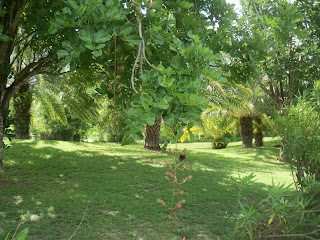
Kigali tree
Kigali tree fruit
Locals call it wild squash. It is not edible. They let the heavy
 fruit dry, then paint Caribbean scenery on it
  
Besides the marina, Jolly Harbour has a few restaurants, souvenir and sports shops, and an art galley.Across from the Casino is a large grocery store. Stop there first!

 
Jolly Harbour Casino
Hotel 'Castle'

 
We took a bus to Antigua's Capitol, St.John. You get off the bus in the middle of the large market, fruits and vegetables, fish and meat are sold in three separate buildings. The rest of the town is as most in the Caribbean, colorful, untidy, and yes, trashy. But people were very friendly.
The area where cruise ships dock, is upscale, of course.


Cruise ship area

After staying four days in Jolly Harbour, we sailed a short distance to Deep Bay. It is beautiful.
In the afternoon stillness the surf was gently brushing onto the beach, shaded by palm trees. The beach was deserted but by the local young couple, getting to know each other in the shallow water.
 
Fort Barrington is on the north side above the beach and condominiums on the south side overlooking the bay.
Grand Royal Antiguan Beach Resort is almost hidden in tall trees
Hotel, lagoon and Deep Bay beach
 
May is here and the tourists season is over. The hotel grounds are still manicured, but the dining room with the elegantly set tables is empty. The office manager let us play tennis on the hotel's court, the only out of eleven that was maintained. The poor economy is effecting Caribbean resorts on all the islands.

Walking the resort grounds, we found another tree, new to us, tamarind. Local lady Andrea called it tamberine. She told us, how it is being prepared: shelled when not yet ripen is used for salsa. When honey-brown inside, it is used for jams. Stew or tamberine juice has a lot of vitamin C and locals use it to cure colds.
Tamarind tree


Tamarind fruit

We sailed back to Jolly Harbour to sign out of Antigua. We are coming back next sailing season.


Thursday, May 30, 2013

ST.MARTIN


We left Saba on the clear Saturday early morning on the 13th of April. We sailed close to the wind and made it in one tack to Marigot Bay on the French side of St.Martin. We needed to stay there for some small repairs on the boat and St.Martin is one of the best islands to do that.

Marigot Bay
Being on the French territory, we indulged ourselves with baguettes, pastry and wine.
For those of us with a sweet tooth, no place can compare to La Serafine

 
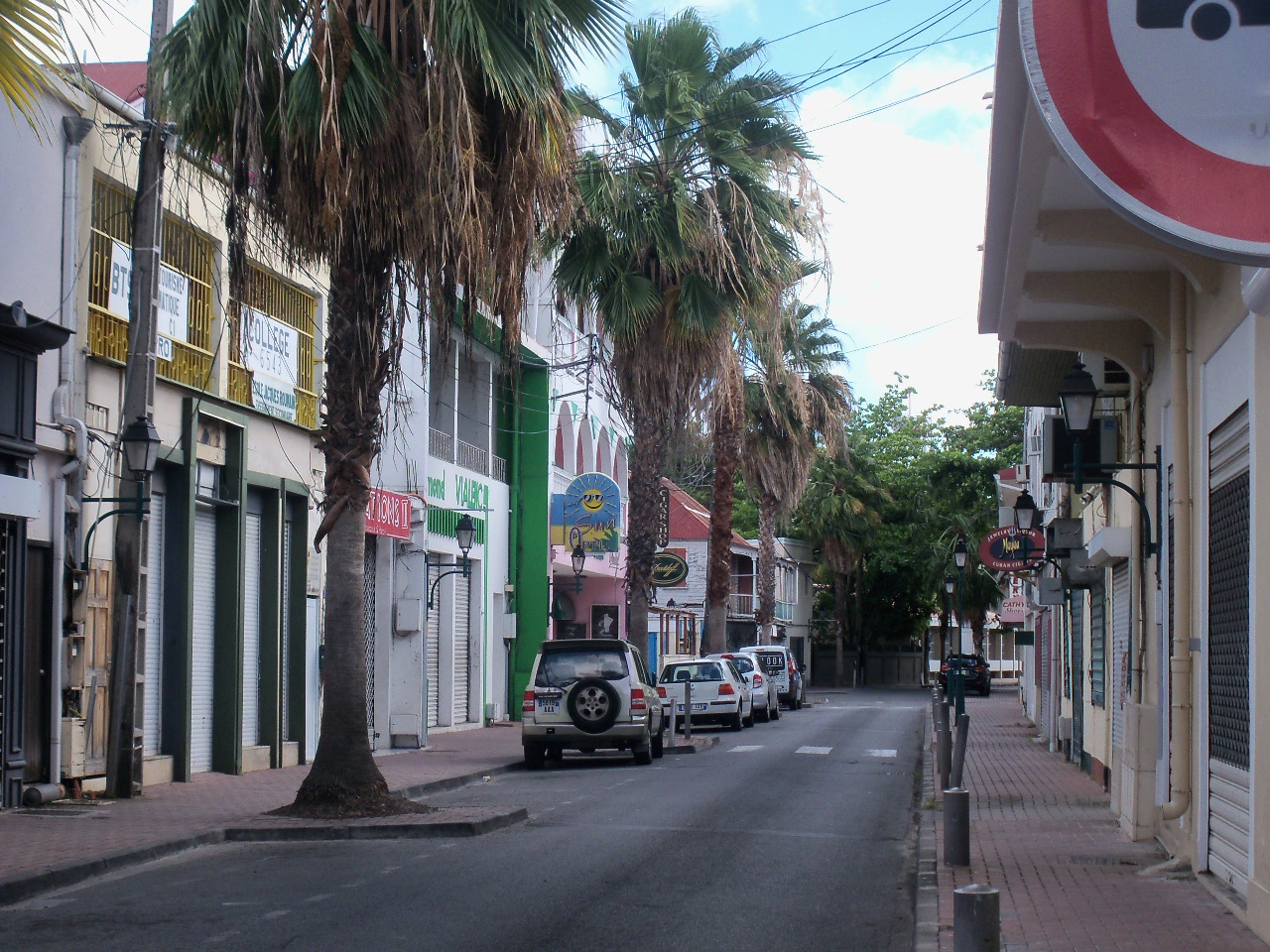
Walking Marigot streets

Palm tree in bloom
An afternoon rest
Retired sailboats
At a hairdresser
Times before we enjoyed other St.Martin bays, this year we sailed by them to the east side to Tintamare. The island is a short distance from St.Martin and during the day many boats bring tourists to enjoy the white beach, but before the sundown, one only hears the sounds of the birds and the waves. Weekends the island is a retreat for St.Martin locals.


We stayed the night, safely on the Marine Park mooring and on the 25th sailed to Colombier on the north side of St.Barth.
Anse de Colombier
 
Moonrise in Anse de Colombier
After a short rest we were off to an overnight sail to Jolly Harbour on the west side of Antigua

Friday, April 26, 2013

SABA, DUTCH ANTILLES


We left Virgin Gorda early afternoon on the 9th of April. We intended sailing to Saint Martin, but the persistent east wind brought us to Saba.
Sailing through the night, we arrived there at a daybreak and Saba appeared as a mysterious dark rock rising from the sea.

A light high up on the hill was the sign of life, and then the first morning sun rays outlined a few daring little white houses clenching on to the cliffs.

Mooring area

800 steps carved into the rock lead to the Ladder Bay
Until 1940 all the supplies for Saba were by the way of the Ladder Bay and from there carried up the steps. 1943 the road was built to the Fort Bay on the island's south side. The supplies included things like a large safe and piano.

We hung on to the mooring for two days before the seas calmed enough for us to place the motor onto the dinghy. We were determined to visit Saba this time. We moored by the Saba before for a few hours to be rested for an overnight sail to Puerto Rico.

We took a tour with a nice guide and a good driver Cornelius. The road was carved into the rock, some places it felt as if we were hanging over a sea far below us.

Cornelius and Polde


Saba looks rocky from a distance, but it is a green island, especially on the 3000 ft top, almost always hugged by the cloud.


On the five square miles only two main villages are spread over the mountains' saddles. The houses are neat, white with red roofs, well maintained and enchanted with gardens.


1500 Sabans are descendants of Dutch, Scottish and English settlers, and some Africans, who originally came to the island as slaves. They have a strong sense of community and are well organized. Schools, daycare, a home for elderly and handicapped, they have it all. Saba is clean, touring it we saw gloved  teenagers with trash bags picking up whatever the wind swirled into the bushes. Cornelius told us that keeping Saba clean is the duty of the school children.

There are also 400 medical students from all over the world living on Saba. It is not unusual for a Caribbean island to have a medical school. Quiet a few do.

Saba doesn't have beaches, tourists are mostly divers and sailors like us, passing by once a year.
There is a lot to see besides the spectacular views, visiting their galleries and shops with local crafts is a special treat. Lacework brought here centuries ago from the Venezuela, became Saba's tradition.

Learned the lacework from her ancestors, a Saban woman continues the
 tradition while being a museum caretaker
 Glass- flame formed beads are crafted with silver and gold into elegant jewelry.


A walk through the town called Bottom:


If you are not a sailor, you can visit Saba by plane. An airport was built here virtually by hands. It's runway is 400 meters long and planes were especially designed to land here.


Come, Saba is the island of beautiful surprises.